I. The Opening — Simultaneous Exposure
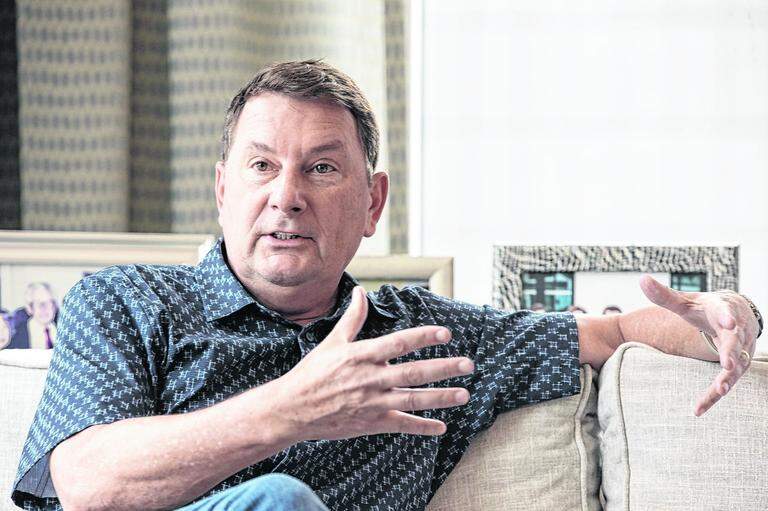
In late March 2026, Brian Ballard testified as a star government witness in Miami federal court. Alongside Secretary of State Marco Rubio, he detailed how former Congressman David Rivera had misled him and attempted to draw Ballard Partners into work with a regime-tied Venezuelan oil company. Ballard told jurors he grew suspicious of potential Foreign Agents Registration Act (FARA) violations, compared the disclosure requirement to “a stop sign,” and ultimately cut ties with Rivera after learning of the $50 million contract.
Weeks earlier, on March 9, 2026, Anthropic had retained Ballard Partners for federal advocacy “regarding DOW procurement” — the Trump administration’s name for the Department of Defense. The lobbying team included Brian Ballard personally, along with Micah Ketchel, a former National Security Council special advisor.
The timing creates a striking overlap: the same prominent lobbyist acting as an expert on foreign agent disclosure violations was simultaneously positioned to advise a major AI company in its sensitive dealings with the federal government.
As of late April 2026, the trial continues with closing arguments underway. Last week, Rep. Pete Sessions testified as a defense witness, portraying Rivera’s Venezuela-related activities as efforts to remove Maduro from power. The prolonged proceedings — featuring high-profile testimony from both Secretary of State Marco Rubio and Rep. Sessions — highlight how disputes over foreign lobbying and disclosure rules continue to occupy senior figures in the administration even as broader questions of war powers and military action against Iran loom.
What gets obscured by this pattern:
The Rivera trial shows one layer: covert lobbying, FARA violations, contractor intelligence. The Maduro operation shows the next layer: that same intelligence network converted into "strategic necessity" arguments that justify military operations. The law firm mergers show the final layer: international legal structures that will manage the accountability for all of it when (not if) someone challenges what happened.
The contractor intelligence that said 'Maduro is a narco-trafficker' came from the same network that was using similar intelligence arguments to guide foreign policy. The network's intelligence output justified the operation while the same infrastructure was advising corporations on government procurement.
The window stays open because the consequence didn't arrive: Congress did not invoke the War Powers Resolution. No criminal investigation was opened. The international law violations were noted but not acted on. The contractor intelligence network was not examined. Each non-consequence teaches the system: the limit is further out than you thought.
By the time Maven goes live in June 2026 and transmits 100% machine-generated targeting to combatant commanders, the legal architecture will have been remade by what happened to Maduro. The law didn't bend. The judges said so in court about the law firm executive orders. The law is being rewritten by what gets away without consequence. And what gets away is what the international law firm infrastructure is positioned to defend.
Palantir Head of UK @louismosley:
— Jawwwn (@jawwwn_) April 28, 2026
“Palantir has 1/5 of its employees here in Britain.”
“That’s 4-5x more than any comparable tech company.”
“We build an enormous amount of product in the UK.”
“That’s a little known fact about Palantir—you could stick a ‘Made in Britain’… pic.twitter.com/0SfZVAAMPc
V. Constitutional Flexibility — Two Documents, One Mechanism
The parallel:In January 2026, Anthropic published Claude's Constitution—a document that describes itself as the "final authority" for how Claude "is and behaves." The company framed it as a foundational charter embodying virtue, wisdom, and ethical commitment.
In January 2026, the Trump administration captured Venezuelan President Nicolás Maduro without congressional approval and framed it as constitutional law-enforcement action.
Both documents claim to be binding. Both have been weaponized through the same mechanism: unilateral reinterpretation by the actor with power, while maintaining the appearance of fidelity to constitutional principles.
II. The Pattern — Why This Is Happening
Donald Trump brought to the presidency a history spanning 45+ years of involvement in over 4,500 lawsuits, having been taught by Roy Cohn how to consolidate power through lawfare. Here in 2026, after firing several FBI agents & reorganizing the department of justice, most of these cases are resolved but the weaponization infrastructure remains—now deployed against law firms, judges, and anyone who might constrain executive power.
The pardon power has now extended far beyond the halls of congress and those trying to overthrow democracy to numerous white-collar criminals convicted of fraud with restitution and fines waived. Some have been pardoned over & over again despite sex crimes & felonies. Felon has become a decorate word here. Trump even fired the Pardon Attorney when she refused to recommend clemency for a Trump donor; the replacement's rationale: "No MAGA left behind.
Examples of the pardon functioning as legal infrastructure include individuals with prior fraud convictions — such as Adriana Camberos, who received clemency in Trump’s first term for one conspiracy and was later pardoned again in 2026 for a separate multimillion-dollar mail and wire fraud scheme — now operate with liabilities administratively cleared. The same pattern appears in cases of bank fraud and tax evasion (Todd and Julie Chrisley), securities fraud (Trevor Milton), and public corruption involving honest services fraud (former Tennessee House Speaker Glen Casada).
When executive clemency repeatedly nullifies criminal and civil consequences for repeat offenders, the traditional deterrent of law dissolves. Yet the need for sophisticated legal counsel remains; it simply shifts from defending against punishment to expertly managing government relationships inside this new environment. Andrew Paul Johnson: A Jan. 6 rioter who was pardoned by Trump for his role in the capitol breach was later sentenced to life in prison in March 2026 for sexually abusing children, with charges including molestation and lewd exhibition
The pardon power has also cleared the path for direct service in government. Charles Kushner, convicted in 2005 of tax evasion, witness retaliation, and illegal campaign contributions — including a scheme involving hiring a prostitute to entrap and record his brother-in-law — received a full pardon from Trump in December 2020. In 2025, Trump nominated him as U.S. Ambassador to France, and the Senate confirmed the appointment. Similar patterns appear with other allies: individuals previously pardoned or facing serious legal exposure have moved into influential advisory, lobbying, or official roles inside the administration, where cleared records remove formal barriers to holding positions of public trust.
Before pardon: Legal counsel manages liability exposure. The goal is to limit consequences. After pardon: Legal counsel manages government relationships. The goal is to operate inside the new accountability architecture—which no longer exists in the traditional sense. DOJ prosecution, civil suits, regulatory enforcement—has been collapsed. What remains is: Foreign agent registration (FARA); International jurisdiction (if the firm is international); Federal procurement compliance; Disclosure requirements. These are not consequences. These are obstacles. They require navigation, not prevention.
Lawfirm Merger Acceleration
The law firm merger wave accelerates in 2024-2026. Allen & Overy and Shearman & Sterling completed their merger on May 1, 2024, creating A&O Shearman—combining Allen & Overy's $2.6 billion revenue and 3,000 lawyers with Shearman & Sterling's $900 million and 500 lawyers to create a "first fully integrated global elite law firm" with nearly 4,000 lawyers across 47 offices in 29 countries. The explicit rationale: to create "unparalleled geographic reach and global scale" by combining complementary jurisdictional strength—Allen & Overy's dominance in UK and European markets with Shearman & Sterling's position in the US financial services sector.
In April 2026, Perkins Coie and Ashurst voted to merge, creating Ashurst Perkins Coie with 3,000 lawyers across 50+ offices and $2.8 billion in revenue, targeting a July-September 2026 close. Both firms emphasized that their merger would provide "truly global solutions seamlessly across borders" by combining Perkins Coie's technology practice depth with Ashurst's strength in energy, infrastructure, and financial services—sectors they explicitly identified as "industries at the center of global economic transformation."
These mergers are not only driven by market share competition. Both firms explicitly framed their combinations as responses to client demands for "increasingly complex, cross-border" legal capabilities and the need for "truly differentiated global legal platforms." The timing—A&O Shearman closing precisely when the DOJ weaponization wave began in March 2025, Ashurst/Perkins Coie voting in April 2026 during the Maduro operation aftermath—positions these firms to operate across jurisdictions at a moment when traditional US government accountability mechanisms have been dismantled.
The infrastructure is being built inside a specific window. What happens after June 2026 happens inside a legal architecture that will have been shaped by what was built during these months.
III. The DOJ as Control Mechanism — How the Shutdown Creates the Merger
In March 2025, Trump issued a series of executive orders targeting specific law firms by name. Perkins Coie (March 6): Trump ordered suspension of security clearances, termination of contracts, and barred access to federal buildings, citing the firm's work with Hillary Clinton and involvement with the Steele dossier. WilmerHale (March 27): Trump issued Executive Order 14250 titled "Addressing Risks From WilmerHale," citing the firm's employment of Robert Mueller and his former prosecutors. Jenner & Block, Paul Weiss, and Susman Godfrey followed, each targeted for representation of Trump's critics or involvement in investigations against Trump.
Two strategies emerge: Some firms fought back. Perkins Coie sued on May 2, 2025. A federal judge issued a permanent injunction, ruling the executive order violated First Amendment rights. Jenner & Block and WilmerHale sued and both won permanent injunctions from separate federal judges which ruled that the executive orders were unconstitutional. But others capitulated. While the Trump administration did not defend the executive orders against the four firms that fought back, it successfully extracted hundreds of millions of dollars in free legal services from nine others that cut deals with the White House in effort to head-off directives targeting them. Paul Weiss, for example, reached a deal with the administration, agreeing to give tens of millions of dollars in pro bono work for causes Trump supports and to eliminate diversity, equity and inclusion policies.
Courts ruled the executive orders unconstitutional. Four federal judges unanimously found them unconstitutional. But the DOJ's response was not to defend the orders—it was to temporarily drop the appeals in March 2026, then reverse that decision within 24 hours without explanation. On March 2, 2026, DOJ asked the appeals court to dismiss its appeals of the four lower court judgments. The Trump administration then changed its mind, and the next day DOJ asked the appeals court to allow it to continue its appeals in the four cases. Weaponize, watch which firms fight and which capitulate, learn which ones will negotiate. The firms that capitulated gave up hundreds of millions in pro bono work and restructured their diversity policies. The firms that fought—and won—kept their independence but signaled that they would not be reliable partners in a restructured government relationship ecosystem.
Ballard Partners, founded by Brian Ballard, included Susie Wiles (now White House Chief of Staff) for eight years before leaving in 2019; Pam Bondi (appointed US Attorney General) as a partner since 2019; and by Trump's second presidency, had offices in about a dozen cities on three continents. This is not a lobbying firm stumbling into Anthropic representation. This is a strategically positioned node inside a network that has learned—through the calibration of pardon, through the removal of traditional accountability, through the dissolution of the normal consequence chain—exactly what government relationships require in a post-accountability environment.
The DOJ's weaponization of law firms was strategic & effective.
The parallel shutdown — Criminal enforcement gutted:
While the DOJ was weaponizing specific law firms through executive orders, it was simultaneously shutting down criminal enforcement across the entire justice system. In six months, under Attorney General Pam Bondi, the DOJ closed 23,000 criminal cases while launching 32,000 new immigration prosecutions. The shift included a sharp reduction in white-collar, drug, and counterterrorism cases. The firms that represent clients in white-collar cases, FCPA matters, and complex government contracts suddenly found their prosecutorial oversight environment dismantled. The firms that capitulated and cut deals found themselves positioned as trusted advisors to an administration that had just eliminated the mechanisms that would have prosecuted similar conduct.
In February 2025 alone, nearly 11,000 cases were declined, the most in a month since at least 2004. The increase is not the result of inheriting a larger caseload—ProPublica determined this by examining two decades of DOJ data. White-collar crime prosecutions: shut down. FCPA enforcement: paused, then gutted. Deputy Attorney General Todd Blanche announced that DOJ dropped about half of the FCPA cases that were under investigation. Terrorism prosecutions: The Trump DOJ has declined more than 1,000 terrorism cases, more than prior administrations.
Enter the international mergers: The 2026 merger wave happens in this exact environment. Firms that need to operate inside the new government ecosystem without being marked as hostile (like the ones that capitulated) need to rebuild their credibility. Firms that are marked as hostile need to distance themselves from that positioning. And all firms need to position themselves in a way that allows them to navigate an environment where: Criminal liability for corporate misconduct has been administratively eliminated; FCPA enforcement has been deliberately gutted; White-collar crime prosecution has been shut down; But the firms that capitulated are now integrated into government relationships.
By merging internationally, firms can: Claim distance from the capitulation (it was a subsidiary decision); Access the government contract ecosystem through international subsidiaries; Position themselves as experts in navigating regulatory environments where criminal enforcement no longer exists; Build relationships with firms like Ballard Partners that specialize in government relationship management.
By June 2025, 11 law firm client companies including Oracle, Morgan Stanley, Microsoft, and McDonald's were reported as shifting business toward law firms that fought the executive orders, away from those that caved in. This means the firms that capitulated lost major clients. They need repositioning. The mergers provide exactly that: new structure, international domiciliation, access to government procurement ecosystem that no longer has criminal oversight.
The firms that won by fighting are already positioned. The firms that lost by capitulating need to rebuild. Either way, the vacuum created by DOJ gutting white-collar enforcement is filled by law firms positioned to navigate a system with no meaningful consequence mechanism.
The mergers are the solution to the problem the DOJ solved by deconstructing itself.
IV. The Methodology Mirror — How Simultaneity Obscures Authority
The pattern Cause & Effect named precisely: "Each non-consequence teaches the system exactly where the actual limits are." The Maduro operation is that teaching moment made visible in real time. It shows how the legal framework gets bent, then rewritten to accommodate what was already done.
The timeline — simultaneity as strategy: January 3, 2026: U.S. Special Forces capture Venezuelan President Nicolás Maduro in a large-scale military operation in Caracas. This operation: Had NO prior congressional approval; Had NO prior congressional notification; Involved active combat (firefight lasted less than 27 minutes, according to Senate testimony); Resulted in at least 23 Venezuelan security officers killed, 32 Cuban military/intelligence personnel killed; Was "trigger-based" — approved before Christmas, final decision given at 10:46 p.m. ET on January 3.
January 28, 2026 (25 days later): Secretary of State Marco Rubio testifies before the Senate Foreign Relations Committee, defending the operation as constitutional, legal, and a "strategic necessity."
April 17, 2026: Anthropic CEO Dario Amodei meets at the White House with Chief of Staff Susie Wiles — who spent eight years at Ballard Partners before leaving in 2019. Ballard Partners has been Anthropic's registered Pentagon lobbyist for 39 days. Brian Ballard is in Miami testifying about FARA disclosure requirements.
The DC Circuit has scheduled oral argument for May 19, 2026. The three judges will hear whether a domestic AI company can be designated a foreign-adversary-level national security threat for refusing to remove safety constraints from a military contract. Anthropic's lawyers will argue the case. Ballard Partners will continue its federal advocacy while the Rivera trial will still be in deliberations.
The legal sleight-of-hand — "it's not war, it's law enforcement": The Trump administration justified the operation as a "law-enforcement action, with military support, that the president has 'inherent constitutional authority' to undertake." Not an invasion. Not a war. A law-enforcement arrest.
The simultaneity — the actual mechanism:
The methodology operating in real time: (1) Act without authorization (Operation Absolute Resolve, January 3); (2) Reframe as constitutional (immediate narrative: law-enforcement, indictment-based, commander-in-chief authority); (3) Hold a hearing to defend the reframe (Rubio testimony, January 28); (4) No consequences for the legal boundary violation (Congress accepts the framing; no War Powers resolution passes; no investigation); (5) The next operation learns the limit is further out (If the Maduro capture has no consequence, what about Iran? What about the next 100% machine-generated Maven strike?)
The Congressional hearing is not oversight. It is aftermarket legitimation. The operation that violated international law gets congressional theater, not congressional constraint.
The legal precedent being set: Rubio's testimony established: The president can conduct military operations against foreign heads of state without prior congressional approval if: (1) The target is "indicted" in U.S. court; (2) The operation is framed as "law-enforcement" rather than war; (3) It is "brief" and "limited in scope"; (4) The administration claims it could not have been briefed to Congress in advance.
That precedent is now the template. Every president knows the limits have moved.
Standing ovation for this line from King Charles: The U.S. Supreme court historical society has calculated that Magna Carta is cited in at least 160 supreme court cases since 1789, not least as the foundation of the principle that executive power is subject to checks and… pic.twitter.com/2zLlu6jdYy
— Acyn (@Acyn) April 28, 2026
How flexibility becomes a weapon:
A true constitutional system is designed to be flexible—to evolve through public amendment, democratic contestation, and time. The US Constitution was built for this. Anthropic's Constitution claims to be a "perpetual work in progress." But flexibility can be weaponized. Instead of requiring public amendment to change the rules, the actors with power simply reinterpret them unilaterally while claiming fidelity to the original document.
When the Executive captures a foreign head of state, the Constitution says Congress must approve prolonged military operations (War Powers Act). When the DOJ redirects prosecutions away from white-collar crime, the Constitution says equal protection under law. When the Pentagon issues directives overriding contractual constraints, the Constitution says due process. None of these happened. Instead: The Executive acted. The DOJ redirected. The Pentagon issued directives. Then the actors claimed they were following constitutional authority.
Speed is the key. By the time public contestation could occur—by the time Congress could invoke War Powers, by the time courts could rule, by the time citizens could demand accountability—the precedent was already set. The next operation learned the limit had moved further out. The next interpretation was more radical. The window for democratic amendment had closed.
The corporate version—Anthropic's Constitution: Anthropic presented Claude's Constitution as a binding charter establishing permanent values. But in August 2025, Anthropic "quietly shifted" its consumer data policy, unilaterally extending data retention and reversing its opt-in default without public amendment process. More significantly, when the Pentagon demanded the right to use Claude for "any lawful use"—overriding Anthropic's stated constitutional prohibitions on autonomous weapons—Anthropic's response was clarifying: models deployed to the military "wouldn't necessarily be trained on the same constitution."
The Constitution was final authority. Until it wasn't. Until commercial pressure made it negotiable. Until a powerful customer demanded reinterpretation.
Lawfare's analysis of Anthropic's Constitution made this precise: The document is "less convincing as a framework for public legitimacy" because "the company remains, in the end, the author, interpreter, and arbiter of the principles by which it claims to be bound." The same criticism applies to how the US Constitution is being reinterpreted right now.
Where the law firm infrastructure completes the pattern: When the US Constitution is reinterpreted, someone has to make it work legally. When Anthropic's Constitution is overridden, someone has to explain why it's still binding. When the Pentagon demands "any lawful use" of AI systems, someone has to draft the contracts that satisfy both the Pentagon's demands and Anthropic's legal exposure.
International law firms positioned across US and UK jurisdictions, staffed by people who simultaneously testify about constitutional violations and advise clients on navigating them—these firms are the infrastructure that manages the gap between constitutional aspiration and operational reality.
They don't change the Constitution. They don't openly violate it. They navigate the space where constitutional language still claims authority but operational definitions have been redefined unilaterally. They position themselves as experts in the distance between what the document says and what happens.
The constitutional question that remains: A constitution is only durable when violations trigger consequences. When consequences don't arrive—when the Maduro operation produces no War Powers invocation, no investigation, no amendment—the constitution becomes performative. The document survives. The authority it claims to protect dissolves.
The law firm infrastructure exists to manage that dissolution. It doesn't openly destroy constitutional order. It positions itself as expert in navigating the gap between what the Constitution claims and what power actually does. It makes that gap appear technical rather than radical. It transforms constitutional violation into contractual negotiation.
By the time citizens understand the Constitution has been weaponized—that its flexibility has been captured by the actors it was designed to constrain—the legal architecture will have been rebuilt through law firm expertise, international domiciliation, and the distributed accountability that simultaneity produces.
The Constitution survives the way Anthropic's Constitution survives: on paper, with full legitimacy, while the actual authority resides with whoever can reinterpret it fastest and build the legal infrastructure to make the reinterpretation stick.
In Closing
The two things running in parallel that determine what kind of world we live in: May 19: whether the government can blacklist a company for refusing to remove AI safety constraints. June 2026: 100% machine-generated targeting goes live. One determines whether any company can ever again say no. The other determines what happens when none of them do.